
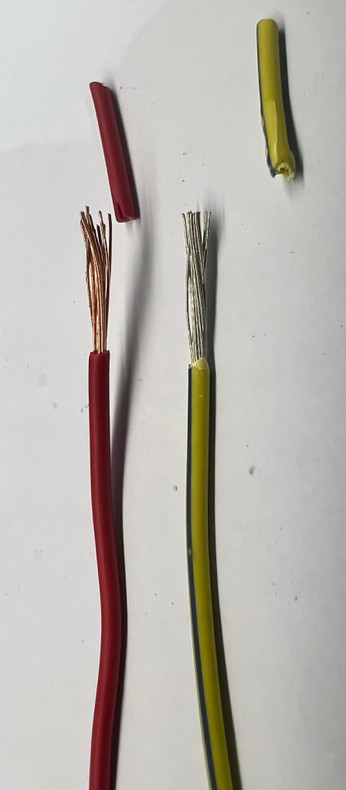
Mobile mining equipment—excavators, haul trucks, drill rigs, and dozers—operates in some of the toughest environments on the planet. Dust, vibration, extreme temperatures, moisture, and corrosive chemicals are everyday challenges. One often‑overlooked factor that can cause costly downtime is the choice of wiring. Selecting the proper cable insulation and conductor type not only safeguards equipment reliability but also helps your maintenance crew work more efficiently.
In this post we compare two popular wiring options—PVC‑insulated wire and our tinned‑high temp marine grade wire—and explain which one is best suited for the rigors of mobile mining machinery.
1. PVC‑Insulated Wire
| Property | What It Means for Mining |
|---|---|
| Insulation | plastic PVC |
| Temperature Range | –10 °C → 50 °C |
| Mechanical Toughness | Flexible when new, but limited resistance to heavy abrasion, impact, and crushing, turns hard and cracks with age allowing moisture // corossion |
| Chemical / UV Resistance | degrades under UV or engine heat exposure and aggressive chemicals and engine oils |
| Moisture Sensitivity | Absorbs water over time; not ideal for frequent splashing or high humidity |
| Cost | Low – economical for low‑stress, indoor wiring |
| Fire Behaviour | Emits hydrochloric acid fumes when burned, raising safety concerns |
Best Use Cases
- Internal control panels and cabinets
- Low‑voltage sensor wiring that stays inside machine cabins
- Short runs that remain protected from dust, mud, and water
While PVC offers a budget‑friendly solution, its limited temperature tolerance and susceptibility to corrosion make it unsuitable for exposed, high‑stress applications, causing costly downtime and maintenance.
2. Our Tinned‑high temp Wire (Mining‑Grade Specification)
| Property | What It Means for Mining |
|---|---|
| Conductor | Fine‑stranded copper, tinned to prevent corrosion from water, mineral‑laden mud, and chemicals |
| Insulation | Cross‑linked polyethylene a thermoset polymer that retains strength at high temperatures |
| Temperature Range | –20 °C → 125 °C |
| Mechanical Toughness | Excellent resistance to abrasion, impact, vibration, and crushing |
| Chemical / UV / Oil Resistance | Highly resistant to salts, acids, oils, solvents, and UV radiation |
| Moisture Protection | Near‑zero water absorption; tin coating keeps the conductor dry |
| Fire Behaviour | Produces less toxic smoke and fewer corrosive gases than PVC |
| Cost | Simular or slightly higher cost, but longer service life reduces total ownership cost |
Best Use Cases
- Power feeds to motors and drives on excavators and haul trucks
- Drag‑chain wiring that experiences constant flexing and vibration
- External harnesses exposed to dust, rain, mud, or oil splashes
- Any cable that must operate continuously above 50 °C
Our wire is the industry standard for rugged, outdoor, and high‑temperature applications—precisely the conditions found on mobile mining equipment.
Bottom Line
- PVC wire is a cost‑effective solution for protected, low‑stress, indoor wiring on mining machines.
- Our Specialty wire is the go‑to choice for rugged, outdoor, high‑temperature, and corrosion‑prone applications—the smart investment for mobile mining machinery that must stay operational day after day.
By aligning cable selection with the real‑world demands of your fleet, you’ll reduce unexpected failures, extend equipment uptime, and ultimately lower total ownership costs.
Need help specifying the exact wire gauge, ordering the right lengths, or creating a maintenance schedule for your fleet? Reach out to our experts at Rapid Plant Maintenance for a free assessment.